
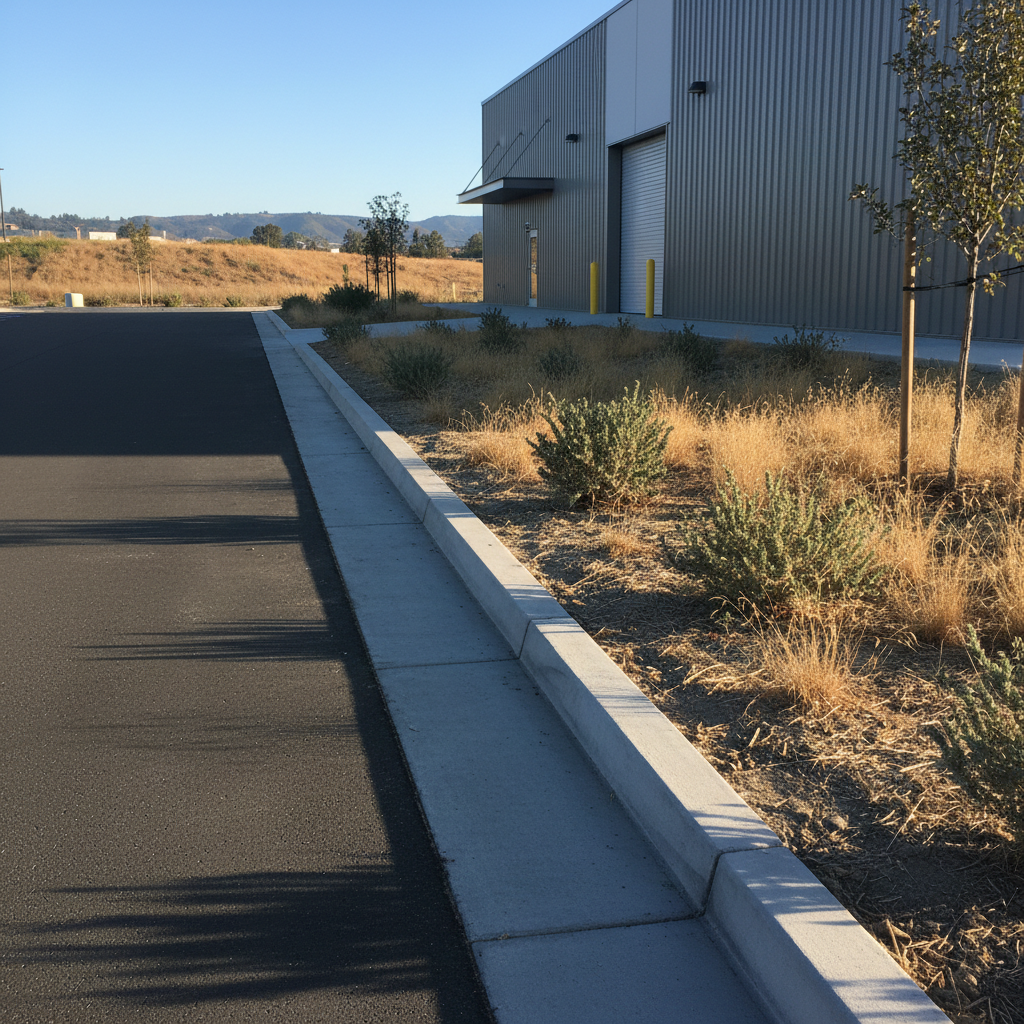
Most people shopping for a concrete contractor in Lakewood are doing it because something is already cracked, sunk, or heaving, and they want it fixed before it gets worse. That urgency is exactly how bad contractors get hired. Three bids come in, the lowest one wins, and six months later there's a new crack running straight through the control joint because nobody prepped the base correctly. Here's what actually separates a contractor worth hiring from one you'll be calling back about.
Check the license before you check the price
In California, flatwork like driveways, patios, and slabs falls under a C-8 concrete contractor license through the CSLB, and you can look up any license number in about thirty seconds on the state's website. It'll tell you if the license is active, how long it's been active, and whether there are any complaints or bond claims against it. A legitimate outfit won't flinch when you ask for the number. If someone hesitates, or says they're "licensed through my boss" or "working under a friend's number," that's your answer. You also want general liability insurance and workers' comp if they have employees. Ask for a certificate, not just a verbal yes.
Lakewood permits for concrete work usually go through the City of Lakewood building division, and anything touching the public sidewalk, curb, or driveway apron also needs an encroachment permit since that strip belongs to the city, not you. A contractor who's done work here before knows this without being told. One who says permits are "usually not necessary" for a driveway replacement is either cutting corners or doesn't do enough volume here to know the process.
What should actually be in the quote
A one-line quote that just says "driveway replacement, $X" tells you nothing. A real quote spells out the base, the reinforcement, the thickness, and the joint layout, because those four things are what determine whether the slab lasts 10 years or 40.
- Base prep: the old slab needs to come out, the sub-grade compacted, and typically 4 inches of compacted Class II road base laid down before any concrete goes in. Skipping or skimping this step is the single biggest reason driveways settle and crack within a few years.
- Thickness: 4 inches is standard for patios and walkways. Driveways carrying a car, let alone a truck or RV, should be poured at 5 to 6 inches, especially near the garage apron where the wheel load concentrates.
- Reinforcement: wire mesh is common and cheap, but it has a habit of sinking to the bottom of the pour if nobody pulls it up into position while placing concrete. Rebar on chairs, typically #3 or #4 bar on an 18-inch grid for driveways, holds its position and does more work holding cracked sections together once a crack does form.
- Control joints: these should be cut roughly every 8 to 10 feet for a standard 4-inch slab, cut to a depth of about a quarter of the slab thickness, and cut within 24 hours of the pour. The point isn't to stop cracking, concrete always wants to crack as it shrinks while curing. The joint tells it where to crack instead of leaving it to pick a random spot through the middle of your new patio.
The questions that tell you if they actually know this area
Lakewood's housing stock is mostly original postwar tract construction from the early 1950s, and a lot of the concrete out there, driveways, walkways, porch slabs, is the original pour or a patch job from decades ago. That matters for a few reasons. The soil under most lots here is a sandy-silt alluvial mix off the coastal plain, generally decent for drainage, but plenty of yards have clay lenses that swell when wet and shrink when dry, which is a common cause of slab heave along the edges of older driveways. A contractor who's worked here knows to check for that before pouring new concrete tight against an existing slab or foundation.
The other local factor is street trees. A lot of Lakewood's original parkways were planted with ficus and other fast-growing trees back in the 1950s, and fifty-plus years of root growth has lifted a huge number of sidewalk panels and driveway aprons across the city. If a contractor doesn't ask whether there's a tree near the work area, or doesn't mention root barriers as an option when there is one, they probably haven't dealt with this problem before, and it is everywhere here.
Weather-wise, Lakewood doesn't deal with freeze-thaw the way inland or northern climates do. The real scheduling issue is the opposite: pouring in July or August heat, when fast-setting concrete can crust on the surface before it's finished being worked, leading to crazing and a weaker top layer. A contractor working here in summer should be talking about pouring early morning, misting or using a curing compound, and keeping the slab covered the first day or two. Come December through March, it's the rainy season that drives the schedule instead, since a fresh pour hit by rain before it sets can wash out the surface finish entirely.
Red flags that mean you should walk away
- A quote with no mention of permits, especially for driveway or sidewalk work that touches the public right-of-way.
- A big cash discount for skipping the contract. That usually means skipping the warranty too.
- Someone willing to pour new concrete directly over an existing cracked slab without removing it or explaining why resurfacing is appropriate in that specific spot. Resurfacing works on a slab that's structurally sound but cosmetically rough. It does nothing for a slab that's settling or has a crack moving through it.
- No mention of cure time. Concrete can usually take foot traffic after about 24 to 48 hours and vehicle weight after around 7 days, but it doesn't reach full strength until around 28 days. If someone tells you to park on a new driveway the next day, don't.
- Vague answers about mix design. A driveway mix should be a minimum of 3,500 PSI, and in a lot of Southern California municipalities that's close to code minimum for exterior flatwork anyway. Contractors stretching a cheaper mix to save money on a job that'll carry car weight are setting you up for premature cracking.
What a fair price is actually buying
Concrete pricing varies a lot based on access, demolition of the old slab, base conditions, and finish, stamped or colored concrete costs more than a broom finish for obvious reasons. But the gap between the cheapest bid and a mid-range one is usually the base prep, the reinforcement, and the time taken on joint layout and finishing. Those aren't corners you want cut on something that's supposed to outlast the roof. A homeowner comparing three bids should ask each contractor to walk through base depth, reinforcement, and joint spacing side by side, not just compare the bottom line number.
If you're weighing a driveway replacement, a patio, or repair on an old porch slab in Lakewood, that's the kind of detail worth getting in writing before anyone shows up with a mixer truck. You can see more about our concrete contractor work and how we lay out a job before the first yard of concrete ever gets poured.